![IAADA [Interdisciplinary Architecture, Art and Design Atelier]](https://www.iaada.com.au/wp-content/uploads/2026/05/cropped-14-scaled-1.png)
Catalyst Connector
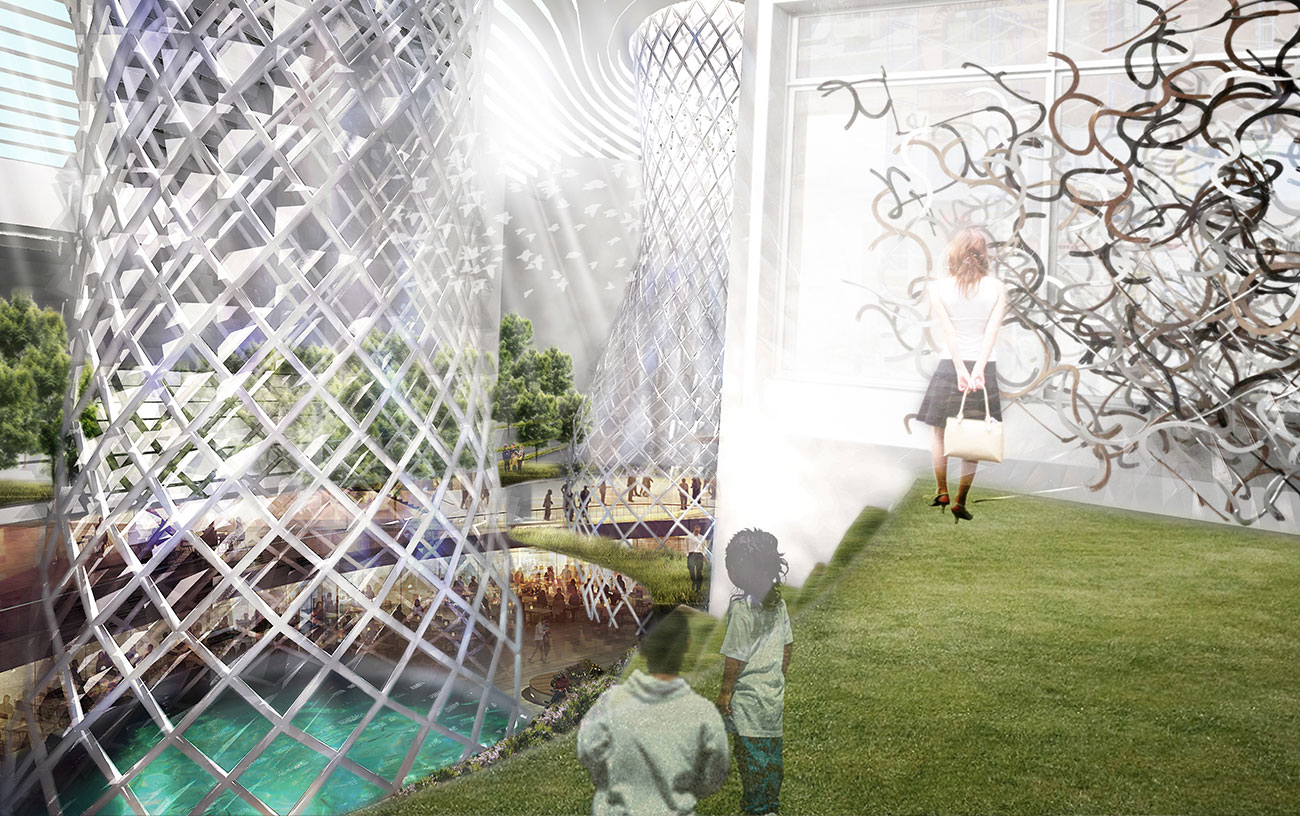
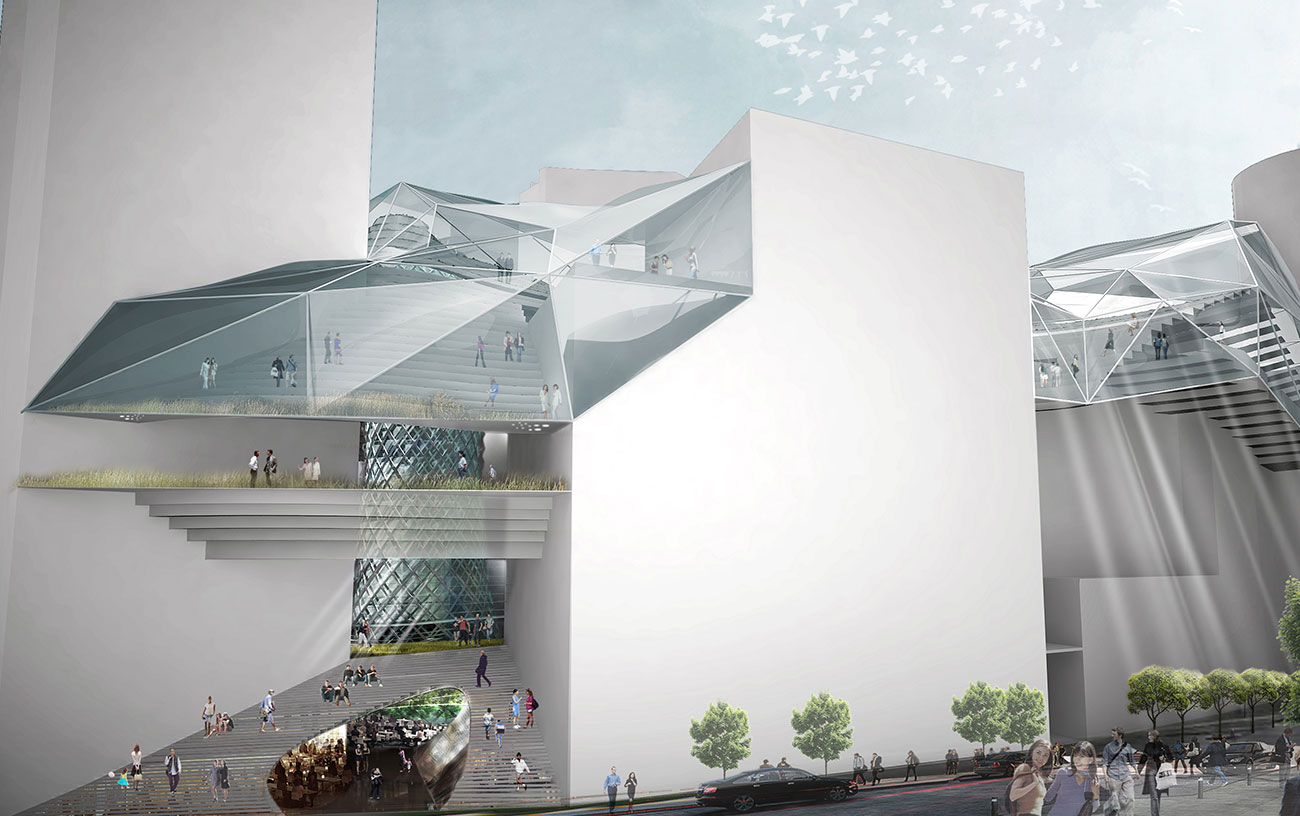
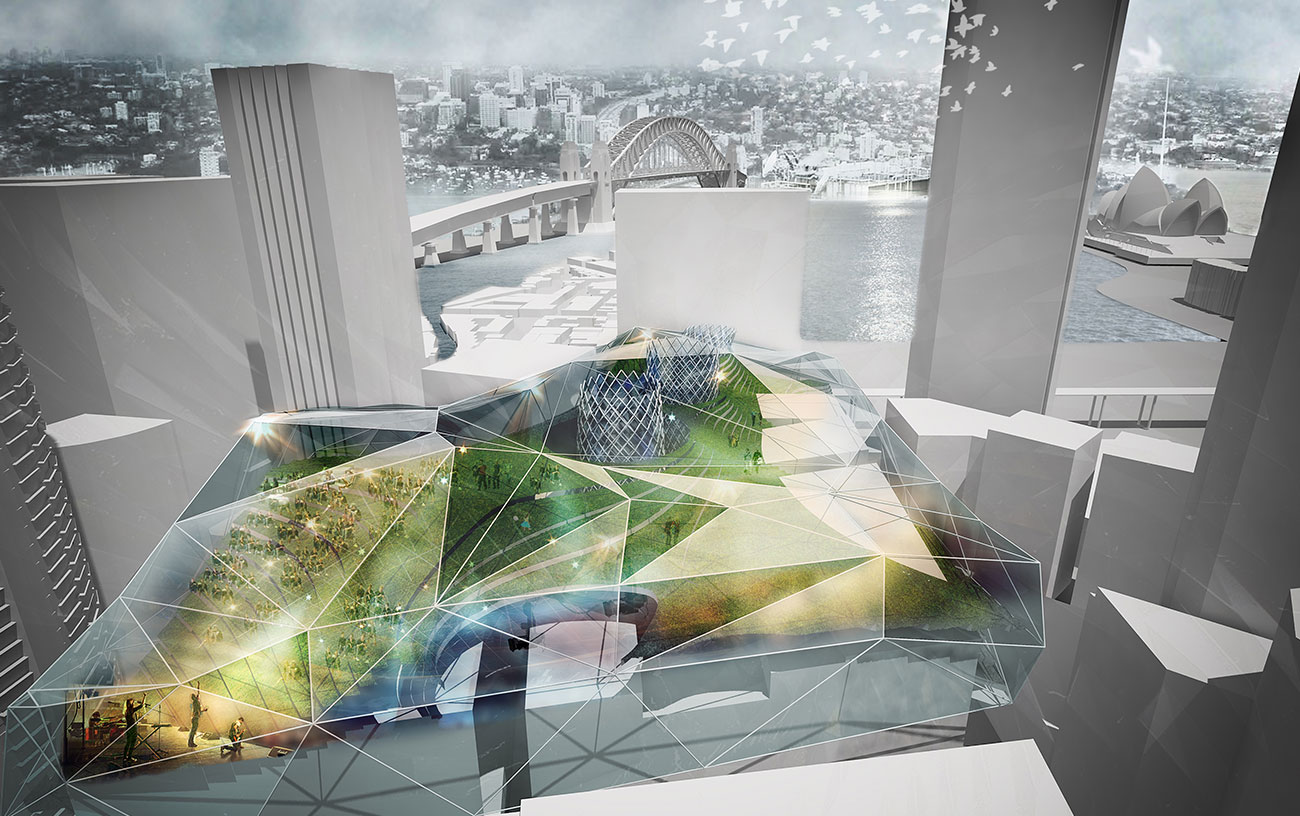
The use of section and topographies become the driving force behind this project. The building emanates from the central quad presenting to the community at its base. Similarly, the interface to the greater community is a series of pods where the spectacle of experimentation by the users is presented to the quad. It is intended that each these pods foster a dialogue and are used to build, experiment, and innovate. By reconstituting and reconsidering each of the precedents, the resultant project intends to not reinvent but understand how section can foster productive architectural relationships. The gathering/communal spaces are stacked through the envelope of the buildings – operating as a gathering space for offices, studios, unifying element that serves the same purpose for a variety of programs. The copious use of vegetated surfaces blurs the existing building’s structure and provides more intimidate environments.
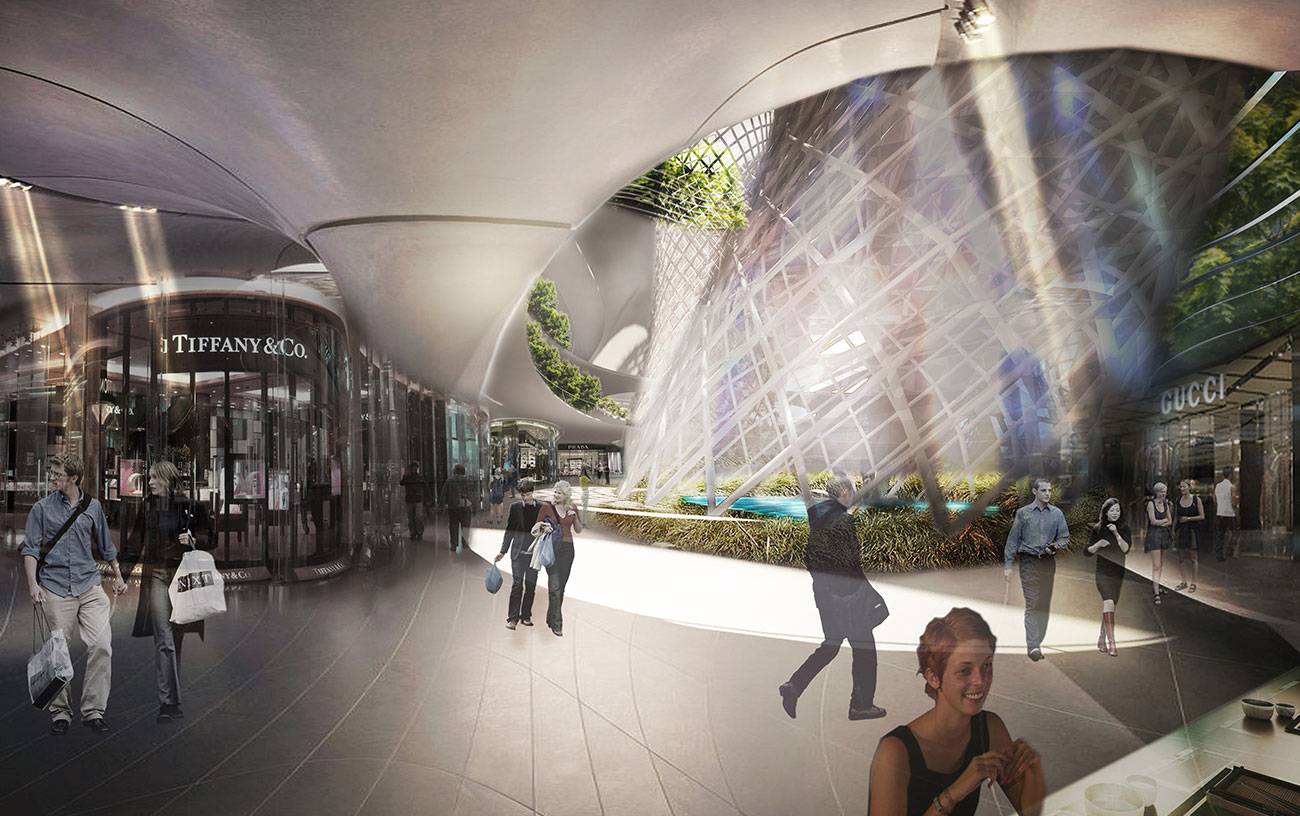
The gathering/communal spaces are stacked through the envelope of the buildings – operating as a gathering space for offices, studios, unifying element that serves the same purpose for a variety of programs. The copious use of vegetated surfaces blurs the existing building’s structure and provides more intimidate environments. The interior green scape is micro climate driven by evapotranspiration and cross breezes that reduce the airborne pollution and cools the residences while providing contemporary gardens available to residences. The ground level is extremely porous with the intention of capturing the interest of passerbyers and architects alike. The center of the space is the auditorium (a) space that can be configured to accommodate multiple size and varyingly public gatherings. The language of productive topographical surfaces is exploited for creating circulation, shading users, creating usable surfaces, storing objects, and seating. The resulting dense, carved space envelopes all the users of the building. The aim of this urban intervention is to intensify and diversify passive connectivity with the urban tissue. Creating an harmonious sustainable rhythm between buildings and public space’s social/cultural activities. The design seeks to find a new approach to respond to the issues of our current CBD’s. While we need to consolidate and centralize our cities there are many unwanted areas that seem to be inevitable. Her, I tried to find an approach based on urban Biotope (integrating nature with architecture and structure) that is based on site condition which apparently differs from site to site based on different conditions, however since the approach is based on computation and using scripting as a tool for design, there is no need to redesign from site to site and generally it is just the input that changes not the design approach. Here, the aim is to create a flux architectural product allowing for future interventions or expansions. This intervention will have the capacity to accommodate change of use and upgrade performance allowing freedom for inhabitants to shape their own space to suit their performance. A sustainable urbanization combining ecology and architecture, generating a healthy environment and adding green areas, roof top garden and a large quantities of trees and greens in public places. .
Architect:
Amir GholamiClient:
UNSWLocation:
Sydney, AustraliaDate:
November 10, 2012
Category: